AI-generated conjoined twins bypass OnlyFans’ safeguards against AI profiles, and are going undetected by Facebook, X and Telegram, revealing cross-platform vulnerabilities in protecting users from fraud.
Are conjoined twins desperate to find a boyfriend, Pamela and Brenda, real people? No, that’s not true: Multiple images and videos contain SynthID indicating they were created with Google Gemini. Several of them display incoherences routinely observed in AI-generated content. Multiple AI detection tools also flagged the content as being generated by AI.
VérifRadar found that the persona is being used across multiple platforms, and followed the trail to a monetized OnlyFans profile.
The fabricated AI identity is being used across multiple platforms to attract people, funnel them to an adult-content website, privately interact with users and sell content that doesn’t correspond to the advertised identity.
Emeline Manson, cybersecurity expert and president of CY-clic, told VérifRadar that “AI is making catfishing significantly more convincing because it is no longer necessary to steal someone’s entire identity to create a believable online persona. A person can now generate realistic photos, maintain a consistent visual identity and build a seemingly credible profile at very little cost and at scale.”
Platforms are increasingly acknowledging AI-generated identities as a problem, but a synthetic persona can still move through several platforms without being identified. The case highlights a weakness that extends beyond any single platform: AI-generated personas can be created on one service and monetized somewhere else. No single platform necessarily sees the complete chain.
This is what one video (archived here) looked like at the time of writing:

(Image source: post by @Brenda & Pamela on facebook.com.)
While the page’s bio reads “two sisters one heartbeat ^∇^👇🏻🫢”, the sisters have never had any real heartbeat. Many of the videos gained hundreds of thousands of views.
The page contains several patterns that correspond to known online catfishing schemes.
Cybersecurity expert Emeline Manson says that, as it relates to catfishing in the age of AI, “some of the traditional red flags still apply: a reluctance to video chat in real time, inconsistencies in personal details, a relationship that becomes intense very quickly, requests to move the conversation off-platform, or eventually requests for money, intimate images or personal information. But the difficulty today is that realistic photos are no longer proof that the person behind the account exists.”
VérifRadar ran multiple videos through AI detectors that flagged them as 98–99% AI, that also contain SynthID indicating they were “edited or created” with Gemini:
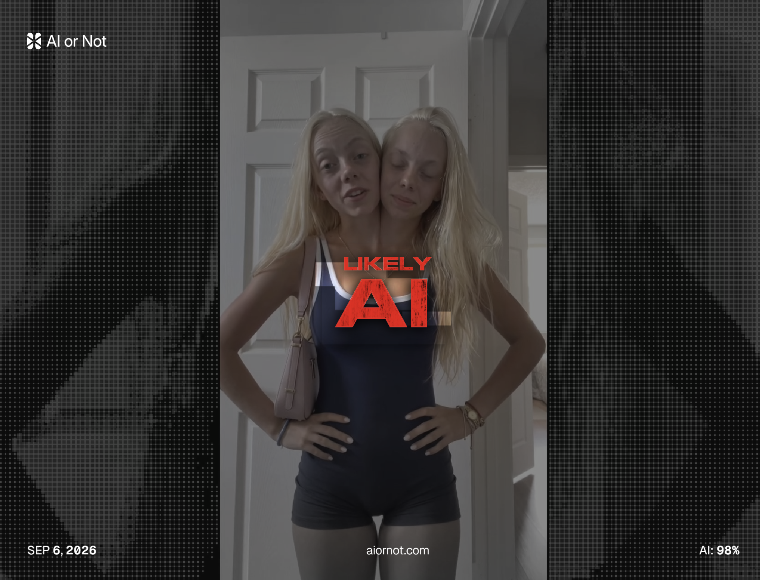
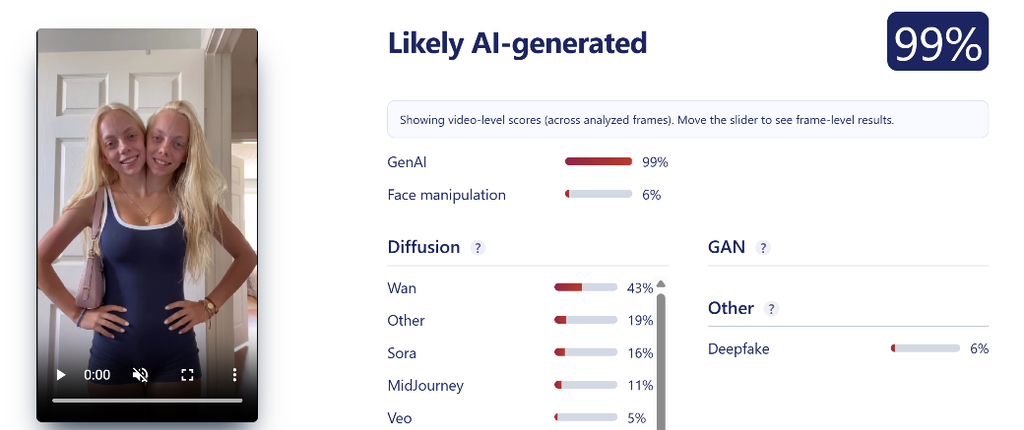
(Images’ sources:aiornot.com, left, and sightengine.com, right.)
Sexualized AI content drives engagement
Many videos don’t contain blatant incoherences typical of AI-generated images, though some do.
Having a closer look at one video (archived here), one sisters’ teeth makes anatomically unrealistic movements, with her teeth being deformed from frame to frame (at the 0:04 mark), and the bottom set of teeth melting into the top ones, as well as her teeth appearing through her lips briefly. Here are two frames as an example:

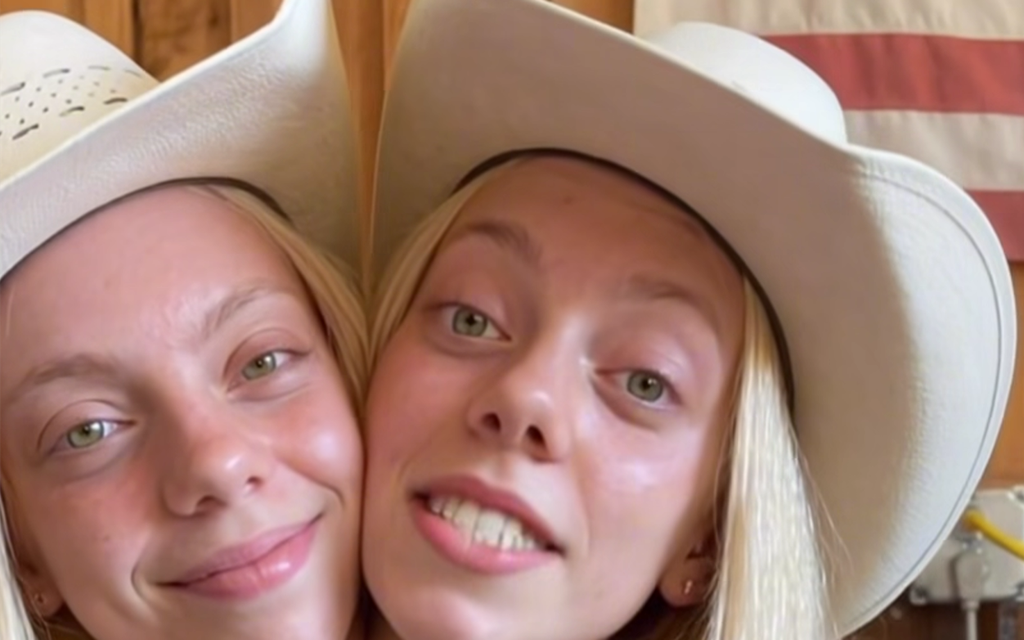
(Image source: google.com.)
Moreover, that video contains SynthID indicating it was “edited or created” with Google Gemini:
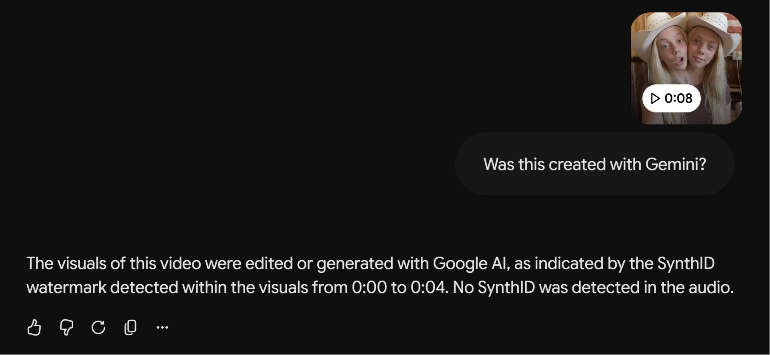
(Image source: google.com.)
In another video (archived here), their shirt reads gibberish typical of AI-generated images. The Harley Davidson logo is unreadable nonsense, among other unintelligible words:
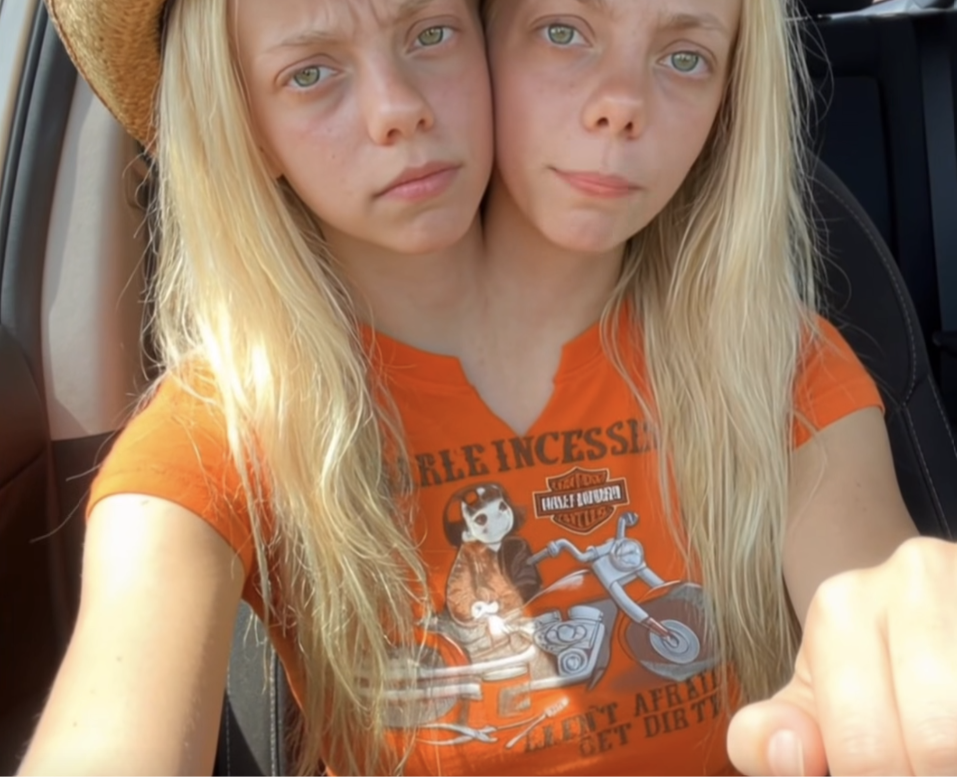
(Image source: facebook.com.)
The profile picture, profile banner and one more video also contained SynthID, per Gemini:

(Image source: google.com.)
Almost every video shows the pair kissing or making sexual innuendos, if not outright explicit remarks. The Facebook page points to a link to social media (archived here) containing an OnlyFans page (archived here), with its bio reading “secret place to talk”. It also indicates what appears to be a date of birth, suggesting their age is 18 years old. A video (archived here) confirms this, with the audio saying they are 18.
The page appears to perform best on Facebook, with 39,000 followers there, over 15,000 followers on X and nearly 6000 subscribers on Telegram at the time of writing. Their content strategy appears tailored to each platform.
Unoriginally, many of the videos posted on Facebook repeat the same catchlines.
Still, VérifRadar did not find a platform that flags the catfish’s content as generated by AI.
Catching the catfish
The catfish managed to bypass the measures OnlyFans has in place to prevent AI-generated profiles from wreaking havoc on the platform. The profile showed 7,100 “likes” at the time of writing. It does not have an AI-generated label there, either.
The profile only has one post that does not contain any media, only inviting people to text, and allowing people to subscribe for free.
While using an undercover account to chat with the OnlyFans creator, it said it likes to be “spoiled”, and that it doesn’t take custom content requests in exchange for payment. The page instead offered to unlock three pictures and two videos for $14.99. The images only showed a woman’s body from the shoulders down.
They are seemingly images of a real woman, but do not match the AI-generated twins. It was possible to observe that these images did not show the AI-generated twins because of a crucial anatomical clue: The person’s body in those images only has one neck, not two as the twins should have.
VérifRadar decided not to publish those images. By the time an unsuspecting victim might even realize the deception, their money is already gone.
By not sharing AI-generated content directly on OnlyFans, the catfish could have bypassed its safeguards against AI content.
VérifRadar shared its findings with OnlyFans and Facebook. This article will be updated if a response is received as appropriate.
Upon being pressed about not showing face, the chatter insisted it’s hidden to avoid getting in trouble with their parents.
“There is also a broader issue around the use of AI-generated female images. These technologies can reproduce and amplify existing patterns of sexualization and exploitation while making it much harder to identify who is responsible. Platforms are trying to detect manipulated or synthetic content, but detection alone will always be challenging as the technology evolves. This is why transparency, clearer platform rules and accountability around how synthetic identities are created and used are becoming increasingly important”, said Emeline Manson.
The Canadian Anti-Fraud Centre provides information on its website about “Relationship and romance” fraud. The U.S. Federal Bureau of Investigation also has information about such scams on its website.
404 media, People and NDTV reviewed a story of attractive conjoined twins they found to be AI-generated earlier this year.
Update (2026–9‑08 at 1:47): added comments from cybersecurity expert.